
The Murdaugh Murders: From Conviction to a 2027 Retrial
October 6, 2026
South Carolina's Supreme Court threw out Alex Murdaugh's murder convictions over jury interference. His retrial is set for April 2027 in Sumter County.
October 2, 2025 · Updated October 5, 2026 · Cory
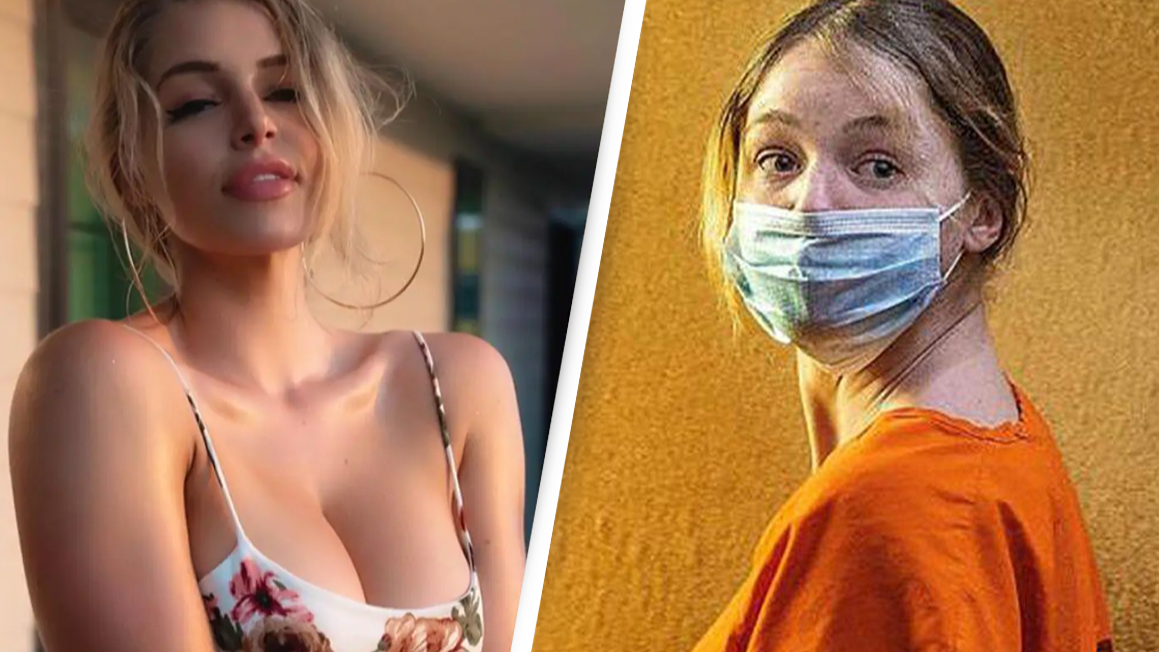
At 4:57 p.m. on April 3, 2022, Courtney Clenney called 911 from the Miami apartment she shared with her boyfriend, Christian Obumseli, to report that he had been stabbed. According to prosecutors, Obumseli can be heard on the call saying he was dying and losing feeling in his arm, and Clenney can be heard saying, "I'm so sorry."
She later told police that Obumseli had attacked her and that she grabbed a knife and threw it at him from about 10 feet away. The medical examiner disagreed. The autopsy found that Obumseli died from a forceful downward thrust of a blade that went three inches into his chest and severed his subclavian artery, and concluded the wound could not have come from a knife thrown from that distance.
Obumseli was 27 and worked in cryptocurrency. Clenney, then 26, was a social media and OnlyFans model known online as Courtney Tailor. She was charged with second-degree murder and said she acted in self-defense. On August 10, 2026, after more than four years and several trial dates, she pleaded guilty to manslaughter with a deadly weapon and was sentenced to six years in prison.
The couple's relationship began in November 2020. Before Miami, they lived in a penthouse at the Berkshire Riverview in South Austin, Texas. A neighbor who lived below them told FOX 7 Austin that their fights were frequent and at times spilled into his space; during one, a tiger painting was thrown onto his tenth-floor balcony. He said police were called to the couple's apartment multiple times.
When Clenney was arrested, Miami-Dade State Attorney Katherine Fernandez Rundle called the relationship "tempestuous and combative" and said the violence continued after the move to Miami, to the point that their building was prepared to evict them. Two videos from February 2022 were reported: one from a trip to Aspen, Colorado, that appears to show Clenney yelling at and repeatedly hitting Obumseli, and a building elevator video that appeared to show her shoving and hitting him.
Clenney was arrested in August 2022, four months after Obumseli's death, at a rehabilitation facility in Hawaii where her attorney said she was being treated for substance abuse and post-traumatic stress disorder. She was returned to Florida, pleaded not guilty, and was held without bond for the rest of the case.
Her attorney, Frank Prieto, argued the stabbing was self-defense and pushed for the case to be treated as manslaughter rather than murder. The defense said Obumseli had engaged in a pattern of physical violence, intimidation and emotional abuse, and prepared to argue that Clenney was a battered partner. Obumseli's family has maintained that he was the victim of domestic violence.
A defense filing laid out text messages the lawyers planned to use. In an April 2021 exchange, Clenney accused Obumseli of hitting her in the face; he allegedly replied that he was trying to move her hand and did not mean to hit her. In August 2021, she texted that he had been punching her in the back.
The filing described other alleged incidents: a dislocated shoulder during a September 2021 argument about leaving a pool, fractured ribs during a 2021 trip to Dubai after an argument about smoking marijuana, and an injured finger in Austin in January 2022. These were the defense's allegations. Because the case ended in a plea, a jury never weighed them.
A separate case opened against Clenney's parents, Dewayne "Kim" and Deborah Clenney of Bee Cave, Texas. According to arrest affidavits, investigators believed Clenney gave Obumseli's laptop to her parents at some point between the killing and her arrest. The attorney for Obumseli's estate told investigators no one had been given permission to keep or access it.
The parents and Clenney herself were each charged with one count of unauthorized access to a computer, a third-degree felony in Florida. Search warrants for iCloud accounts turned up a group chat between the parents and Clenney's attorneys. In one message, her father allegedly wrote, "Hell yeah! That PIN worked." An attorney replied, "Kim. Hold off going through the computer please. I don't want to turn you into a witness just yet if you find something useful." Deborah Clenney allegedly took the laptop to an attorney in Dallas, and it was later turned over to an IT expert in Florida.
In July 2024, prosecutors dropped the computer charges against Clenney and her parents after a circuit judge ruled that the Miami-Dade State Attorney's Office had violated attorney-client privilege when investigators seized messages between the family and its lawyers. Jude Faccidomo, who represented the parents, called for the office to recuse itself from the murder case.
Obumseli's estate filed a civil lawsuit against Clenney and several companies connected to the apartment building. It accused Clenney of battery and alleged that the condominium, property management and security defendants failed to provide adequate security.
Clenney settled her part of that case before the criminal case ended. On December 3, 2025, the estate filed a notice of settlement as to Clenney only, and the claims against her were dismissed with prejudice on March 4, 2026. The terms are not public.
The criminal trial kept slipping. In December 2025, a judge denied Clenney bond again and set trial for April 27, 2026. That date did not hold: in late April, with prosecutors still needing to complete more than a dozen depositions, both sides jointly asked for more time. Circuit Judge Andrea Ricker Wolfson granted it and warned, "This really has to be a final continuance." Trial was reset for August 2026.
On July 31, 2026, Prieto confirmed that Clenney had reached a deal, without disclosing its terms. On August 10, 2026, in a Miami courtroom, she pleaded guilty to manslaughter with a deadly weapon, reduced from second-degree murder.
She was sentenced to six years in prison followed by five years of probation, with credit for the nearly four years she had already spent in custody. That means she could be released and begin probation in about two years. After release she must undergo mental health and substance abuse evaluations and treatment.
Prosecutors said she should not be allowed to profit from the killing and that they would support any effort by the Florida Attorney General's Office to stop her. "We do believe that nobody should benefit financially from murdering somebody," Assistant State Attorney Shawn Abuhoff said. Rundle said in a statement that Obumseli's family "finally heard what they long sought: Courtney Clenney accepting full responsibility for his death."
Obumseli's family told the court he was someone who loved deeply and had stayed in a destructive relationship despite earlier violence. They said he had written about fears that his love for Clenney could cost him his life. "Your actions have left the Obumseli family with a void that can never be filled," a family representative said.
His mother, Chio Obumseli, described him as kindhearted, compassionate, friendly and respectful. "Four years later, there are still nights when I cannot sleep," she said. "Nothing can describe what it feels like for a mother to stand at the grave of her child." She told the court the day closed a legal chapter but not the family's grief.
A plea ends a case without a trial, so the competing accounts of the relationship were never tested before a jury. What the record settles is the conviction: Courtney Clenney pleaded guilty to manslaughter with a deadly weapon in the death of Christian Obumseli.
Found an error? Tell us. Corrections are dated and listed on the corrections page.

October 6, 2026
South Carolina's Supreme Court threw out Alex Murdaugh's murder convictions over jury interference. His retrial is set for April 2027 in Sumter County.

September 29, 2026
Bryan Kohberger pleaded guilty in 2025 to avoid a death sentence. In July 2026 he asked to withdraw that plea. Here is where the case stands.

September 8, 2026
The Constitution requires proof beyond a reasonable doubt but no set definition of it. Here is what the Supreme Court and jury instructions say.