
The Murdaugh Murders: From Conviction to a 2027 Retrial
October 6, 2026
South Carolina's Supreme Court threw out Alex Murdaugh's murder convictions over jury interference. His retrial is set for April 2027 in Sumter County.
March 2, 2025 · Updated October 5, 2026 · Cory
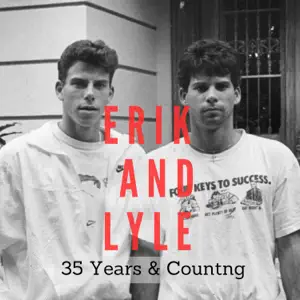
On August 18, 1989, Lyle and Erik Menendez bought two shotguns at a Big 5 Sporting Goods store in San Diego. Erik used a driver's license stolen from Donovan Goodreau, a friend of Lyle's. Two days later, their parents, José and Mary Louise "Kitty" Menendez, were shot to death in the family's Beverly Hills home.
The brothers were convicted of first-degree murder and sentenced in 1996 to life without parole. Nearly three decades later, a judge resentenced them, a parole board turned them down, and the board then moved their next hearing up to March 2027. Here is what the record shows, from the gun counter to the parole board.
Shotguns were not the first plan. That day the brothers visited several Southern California gun stores looking for handguns. A two-week waiting period and a problem with Lyle's driver's license pushed them to shotguns instead.
On the evening of August 20, José and Kitty were watching The Spy Who Loved Me in the den of the house. Lyle and Erik came in carrying the loaded shotguns. José was shot six times, including a fatal shot to the back of the head. Kitty was shot ten times. Lyle went back to the car, reloaded with ammunition Erik handed him, and fired the last shot.
Then they tried to build an alibi. They planned to buy tickets for Batman and dropped the idea when they realized the theater time-stamped its ticket stubs. They got rid of their bloodstained clothes, buried the shotguns along Mulholland Drive, and went to the Taste of L.A. festival at the Santa Monica Civic Auditorium. Back home, Lyle called 911 and told the operator, "Someone killed my parents!"
Lyle suggested the killings were a mob hit tied to his father's business. José was the chief executive of Live Entertainment, and detectives looked at that angle first. What changed their focus was the spending. The brothers left the mansion empty and moved into adjoining condominiums in Marina del Rey.
Lyle bought Chuck's Spring Street Café, a Buffalo wing restaurant in Princeton, New Jersey, along with three Rolex watches and a Porsche Carrera. Erik hired a full-time tennis coach and played tournaments overseas. They traveled to the Caribbean and London. In all they spent about $700,000, most of it from a $650,000 life insurance policy.
Family members said the spending meant nothing and that the brothers' habits had not changed. Police also heard from Glenn Stevens, a friend of Lyle's. Stevens said that a week after the killings, Lyle made a sudden trip home from Princeton to destroy something on the family computer. A computer expert Lyle hired later said he had been paid to make sure a new will José had prepared was deleted.
Erik and a high school classmate, Craig Cignarelli, had written an amateur screenplay called Friends, about a wealthy young man who commits the "perfect murder" by killing his parents for their inheritance. Cignarelli went to police and said Erik had confessed to him. Police had him wear a wire to a lunch with Erik, but Erik did not confess on the recording.
Erik did confess to his psychologist, Jerome Oziel. Oziel told his mistress, Judalon Smyth, and began recording his sessions with both brothers. After the relationship ended badly, Smyth went to police and told them about the brothers and the tapes.
Lyle was arrested outside the Beverly Hills house on March 8, 1990. Erik turned himself in three days later, after flying back to Los Angeles from a tennis tournament in Israel. Both were held without bail. After two years of litigation over therapist-patient privilege, the Supreme Court of California ruled in August 1992 that most of the tapes could be used.
The first trial began in July 1993 and was broadcast on Court TV. Leslie Abramson represented Erik and Jill Lansing represented Lyle. The defense said the brothers killed out of fear for their lives after years of sexual, emotional and physical abuse by José. Erik testified that he first told Lyle about the abuse about two weeks before the killings, and that the shotguns were bought for protection.
Prosecutor Pam Bozanich argued there was no imminent danger. She used the Oziel tapes, in which the brothers said they had planned the killings "beforehand," and pointed out that neither the tapes nor Erik's earlier statements to Cignarelli mentioned sexual abuse. She played Lyle's 911 call to show the jury how convincingly he could perform.
Two cousins testified for the defense. Diane Vander Molen said Lyle confided in her about abuse during a stay with the family in 1976. Andy Cano said Erik told him about it when they were children. Each brother had his own jury, and both deadlocked: female jurors leaned toward voluntary manslaughter, male jurors toward first-degree murder. The trial ended in a mistrial in January 1994.
Los Angeles County District Attorney Gil Garcetti retried the case in 1995. Judge Stanley Weisberg kept cameras out of the courtroom, citing the risk that jurors would be exposed to outside information, and limited the defense to 64 witnesses. Erik testified for fifteen days. Lyle did not testify.
Prosecutor David Conn asked Erik why he had not simply joined the Army to get away from his father. Conn introduced a letter Lyle allegedly wrote to an ex-girlfriend, Traci Baker, that included instructions on how to testify. Forensic psychiatrist Park Dietz testified that Erik did not show signs of "learned helplessness," noting that he had bought guns and practiced at a shooting range.
Weisberg found there was not enough evidence that the brothers were in imminent danger when they killed their parents. Both were convicted of two counts of first-degree murder with the special circumstance of lying in wait, plus conspiracy to commit murder. On July 2, 1996, they were sentenced to life in prison without the possibility of parole.
State and federal courts rejected their appeals for years, starting in 1998. In May 2023, their lawyers filed a habeas corpus petition built on two new pieces of evidence: a 1988 letter that appears to have been written by Erik to Andy Cano describing abuse, and the account of former Menudo member Roy Rosselló, who said on NBC's Today in April 2023 that José Menendez drugged and raped him when he was 14.
On October 24, 2024, Los Angeles County District Attorney George Gascón asked the court to resentence the brothers, citing their time served, their conduct in prison and the dysfunction in the Menendez home. His successor, Nathan Hochman, reversed that position, opposed the habeas petition, and called the self-defense claims "self-serving lies."
On May 13, 2025, Los Angeles Superior Court Judge Michael Jesic resentenced both brothers to 50 years to life. Erik was 18 and Lyle 21 at the time of the killings, which put them under California's youth offender parole rules and made them eligible for parole immediately. Jesic said they had "done enough in the past 35 years that one day they should get that chance," and added, "I'm not suggesting they should be released."
The California Board of Parole Hearings denied Erik parole on August 21, 2025, and Lyle the next day. Both denials were for three years. Commissioners cited repeated rule violations, especially contraband cellphones.
On September 16, 2025, Los Angeles Superior Court Judge William Ryan denied the habeas petition for a new trial. He wrote that neither piece of new evidence was "particularly strong."
Then, in early September 2026, the parole board granted both brothers an earlier parole suitability hearing, tentatively set for March 2027 instead of August 2028. The board relied on a provision of Proposition 9, a 2008 ballot measure, that lets a hearing be moved up when circumstances change or new information suggests a person may be suitable for parole.
Gov. Gavin Newsom also has the power to grant clemency, including a commutation. As of early October 2026 he had not done so, and both brothers remain in prison. The March 2027 hearing is the next scheduled decision in a case that began with a shotgun purchase 37 years ago.
Found an error? Tell us. Corrections are dated and listed on the corrections page.
October 6, 2026
South Carolina's Supreme Court threw out Alex Murdaugh's murder convictions over jury interference. His retrial is set for April 2027 in Sumter County.

September 29, 2026
Bryan Kohberger pleaded guilty in 2025 to avoid a death sentence. In July 2026 he asked to withdraw that plea. Here is where the case stands.
September 8, 2026
The Constitution requires proof beyond a reasonable doubt but no set definition of it. Here is what the Supreme Court and jury instructions say.